
Open Tools to Improve Grid Planning and Operation in Africa
November 1, 2025Empowering Zambia’s National System Operator
Partner: ZESCO
Funder: Quadrature Climate Foundation
Today, 1.18 billion people live in energy poverty, with the majority in Sub-Saharan Africa, where energy affordability is worsening in many regions. While global renewable energy costs have fallen dramatically, and deployment is accelerating, progress is uneven due to local conditions such as access to capital, skills and infrastructure.
Too often, utilities and system operators lack the tools needed to plan power systems that are reliable, cost-effective, and resilient to climate shocks. Recent energy crises, such as multi-day blackouts in Zambia caused by drought-related hydropower shortages, underscore the urgent need for better, data-driven planning and access to the latest modelling techniques.
Open-source energy models offer a powerful alternative where traditional planning methods have fallen short. By allowing users to inspect and adapt assumptions, integrate local data, and collaborate across institutions at low cost, open models enable more transparent, flexible, and inclusive decision-making. When developed collaboratively, they go beyond technical solutions by building trust, strengthening institutional capacity, and restoring planning autonomy to those responsible for operating power systems.
The goal of this project is to empower African utilities and system operators to plan, model, and operate clean, modern, and climate-resilient power systems using open-source tools tailored to their needs. The initiative begins with a co-created national power system model in Zambia, developed in close collaboration with ZESCO as a regional proof of concept. Energy modelling, capacity building, and regional collaboration sit at the heart of the project.
Local data will be fully integrated into the modelling workflow, energy models will be adapted to real operational contexts, and interfaces will be designed around user needs. Institutional staff will be trained not only as users, but as long-term owners and stewards of the tools. With the support of the Association of Power Utilities of Africa (APUA), this approach will scale beyond Zambia, enabling utilities across the continent to make better decisions—driving smarter investment, faster decarbonization, and greater resilience.
Project Overview
Zambia
36 months
3
Project Aims


Project Team


.png&w=828&q=75)

-1.png&w=828&q=75)

Dr. Will Usher
Project Director and Senior Energy System Modeler | Uncertainty (Team Lead)
Project Director

Partners

Related Projects
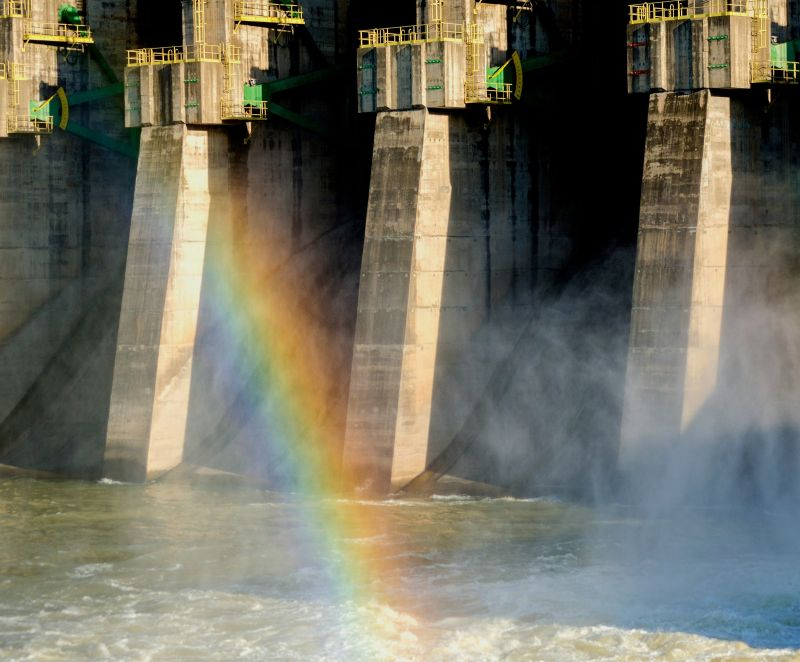
Advancing Hydropower Integration in Africa with PyPSA
Equipping Energy Professionals to Lead Africa’s Renewable Energy Transition
View Project
Open-Source Market Model Innovation Project
An open-source modelling initiative to support a transparent, collaborative, and data-driven transition to a net-zero energy system
View Project